
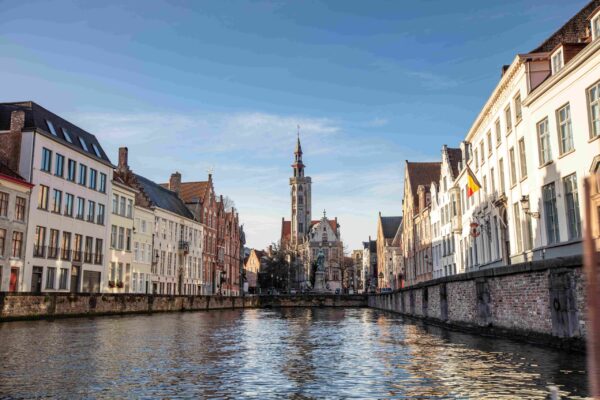
Walking Tour of Bruges Historic Landmarks
A Walking Tour of Bruges is one of the easiest ways to understand the city’s long history and unique atmosphere. Medieval streets, canals, churches, and market squares stand close to each other, making it possible to explore many important places on foot in a single day. This route follows famous landmarks together with several locations that often receive less attention from visitors.
Bruges History and Medieval Heritage
Bruges is one of the best preserved historic cities in Europe. Its origins go back many centuries, while its rise as an important trading center began during the medieval period. Historians generally agree that Viking activity influenced the development of the area during the ninth century. Because the city had access to the sea through connected waterways, trade expanded quickly.
By the thirteenth and fourteenth centuries Bruges was one of the richest cities of northern Europe. Merchants from many parts of the world came to buy and sell cloth, spices, metals, and luxury goods. There were different languages spoken in the streets and the city became an international trading center.
In later centuries the economic conditions changed. Trade routes changed and the closeness of Antwerp grew important. Bruges went into a long period of slower growth. This recession had an impact on the local economy but also helped preserve many historic buildings. Large parts of the medieval city were spared from extensive modernization.
Today the historic center is recognized as a UNESCO World Heritage Site. Visitors come from around the world to see its canals, towers, squares, and churches. Much of the city still looks remarkably similar to earlier centuries.
Starting the Walking Tour of Bruges
Most visitors arrive through the main railway station. From here, the historic center can be reached easily on foot. The route begins south of the old town and gradually moves toward the central squares.
Before starting the walk, many travelers choose to prepare a few essentials:
- Comfortable walking shoes for cobbled streets
- A reusable water bottle
- A light rain jacket because weather can change quickly
- A camera for canal and architectural views
- A city map or offline navigation application
The distance covered by this route is moderate. Most people complete it within two to three hours, though additional stops can easily extend the visit.
Minnewater Park and Begijnhof
One of the first places along the route is Minnewater Park. This peaceful green area surrounds a lake known as the Lake of Love. Trees, walking paths, and open views make it a pleasant introduction to Bruges. Swans are often seen on the water and have become one of the city’s most recognizable symbols.
Close to the park stands the Begijnhof. This enclosed complex was founded during the thirteenth century for women who wished to live a religious life without joining a traditional monastery. White houses surround a quiet courtyard filled with trees and grass.
The Story of the Beguines
The women who lived here were called beguines. They followed religious principles while remaining independent from formal monastic orders. Communities like this appeared across parts of Belgium and the Netherlands.
The Bruges Begijnhof has seen many historical changes, and is one of the most peaceful spots in the city. Visitors often comment on how different the atmosphere is from the busy streets nearby. Inside the complex, silence and respectful behavior are expected.
Walking through this area, you get a first taste of everyday life in the Middle Ages. The simple architecture contrasts with the wealth on display elsewhere in the city.
From Wijngaardplein Into the Historic Center
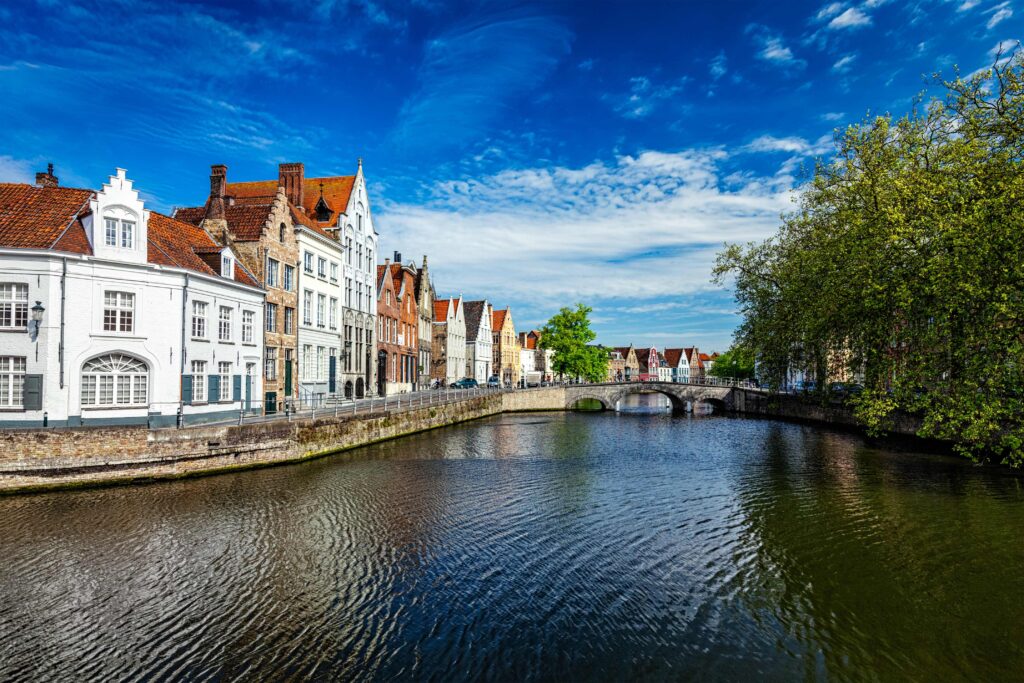
Leaving the Begijnhof, the route continues toward Wijngaardplein. A small square, water views, and traditional buildings create one of the classic scenes associated with Bruges.
The streets begin to narrow and visitors arrive in the historical center. Cobblestones, stepped gables and decorative facades are everywhere you look. Many buildings have been carefully preserved, helping to retain the city’s historic character.
The area is full of bakeries, chocolate shops, and local food stores. Belgian waffles, fries, and handmade chocolate are still not enough for visitors. Many of the stores are keeping with traditions passed down for generations.
The route then approaches Walplein, a small square that serves as a transition between residential streets and some of the city’s best known attractions.
De Halve Maan Brewery and Walplein
Walplein is home to the well–known De Halve Maan Brewery. This brewery has operated for generations and remains one of the most important brewing sites in Bruges.
One of the most interesting features is the underground beer pipeline linking the brewery with a bottling facility outside the historic center. The pipeline was designed to reduce transport traffic through narrow medieval streets but allow production to continue efficiently.
Visitors can learn about brewing traditions with guided tours explaining ingredients, production methods and local beer culture. Also brewed here is Brugse Zot, a beer strongly associated with the city.
The square itself offers attractive historic surroundings. Traditional buildings, outdoor seating areas, and views toward nearby churches create a pleasant atmosphere for a short stop during the walk.
Hidden Streets Near Walplein
Near the square stands Stoofstraat, one of the smallest streets in Bruges. Narrow passageways such as this show how medieval cities used every available space. Walking through these alleys often reveals quiet courtyards and details that many visitors miss.
Several streets in this district preserve their original layout from centuries ago. Because of this, the area remains valuable for understanding how people once moved through the city.
Bonifacius Bridge and Canal Views
From there the road heads north to Bonifacius Bridge. The bridge offers great views over canals, historic buildings, and church towers, which is why many photographs of Bruges are taken from this place.
The bridge looks like it could be medieval, but it was built in the twentieth century. They used materials and architectural details in harmony with the surrounding historic environment.
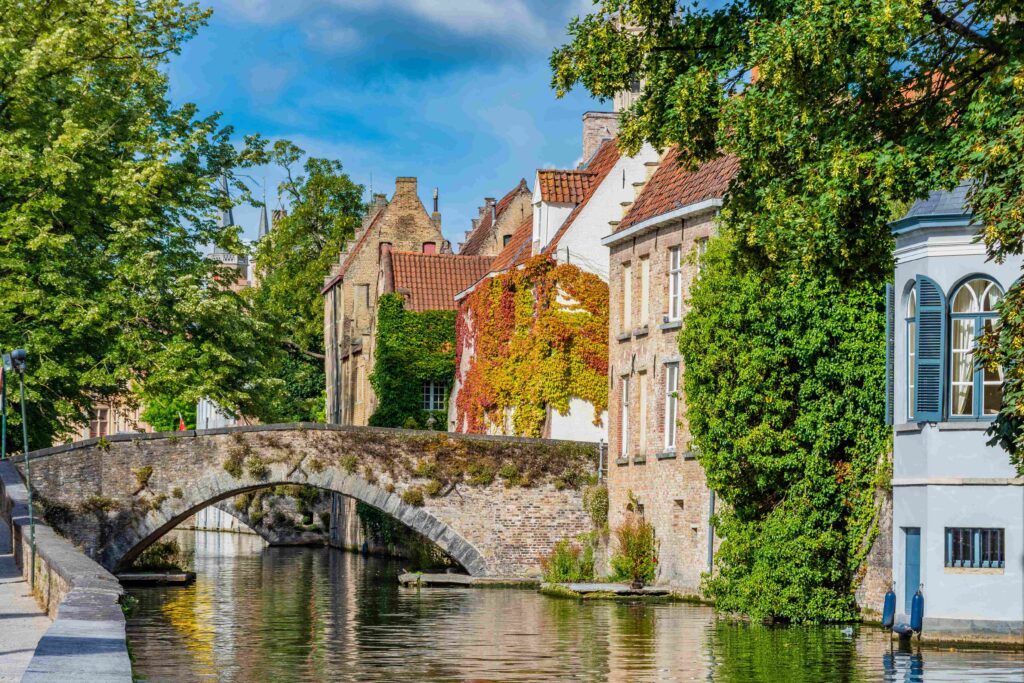
Canals near the city contribute strongly to the identity of the city. Waterways used to be important for transport and trade. They are today some of the most memorable sights in Bruges.
Rozenhoedkaai and Historic Canal Views
After leaving Bonifacius Bridge, the route continues toward Rozenhoedkaai. Many visitors consider this location the most photographed spot in Bruges. Historic buildings rise above the water while canal boats pass slowly below. The view combines several elements that have become symbols of the city.
In the medieval times, this area was an important trade and transportation hub. Goods came in by water and through the commercial parts of the city. A lot has changed in commercial activity since then, but the canals are still a visible reminder of the economic importance of Bruges.
If you stroll along the waterfront, you can also see architecture from different eras. Stone facades, decorative windows, and narrow houses tell of centuries of urban development.
The area attracts visitors throughout the year. Early morning and late afternoon often provide quieter conditions and softer light for photography.
Huidenvettersplein and Vismarkt
A short distance from the canals stands Huidenvettersplein. The name can be translated as Tanners’ Square, referring to workers who processed leather here during the Middle Ages. Industries connected with trade and manufacturing once occupied many parts of Bruges.
Today the square presents a very different atmosphere. Cafes, historic buildings, and outdoor seating areas have replaced the workshops that once operated here. Despite these changes, the historic name continues to preserve the memory of the district’s former activities.
Nearby is Vismarkt, the old fish market. Fish traders originally sold their products closer to the central market area. Over time, authorities decided to move fish sales to a separate location. The market structure that visitors see today dates from later centuries but continues the long tradition of fish trading in Bruges.
Burg Square and Historic Administration
The route now enters Burg Square, one of the most important historic locations in Bruges. Long before the surrounding city expanded, this area served as a center of administration and political power.
Several notable buildings surround the square. Their architecture reflects different periods of history and shows how Bruges evolved over many centuries. Gothic, Renaissance, and later influences can all be seen within a relatively small area.
One of the most impressive structures is the Town Hall. Completed during the late fourteenth century, it remains among the oldest town halls in the Low Countries. Its decorated facade demonstrates the wealth and confidence that Bruges enjoyed during its commercial peak.
Basilica of the Holy Blood
Among the buildings surrounding Burg Square, the Basilica of the Holy Blood attracts particular attention. The church is known for a relic that, according to tradition, contains the blood of Jesus Christ.
The basilica consists of two different chapel levels constructed in different architectural styles. Visitors often notice the contrast between the lower Romanesque section and the more decorative upper chapel.
Each year a religious procession moves through the city carrying the relic. This tradition has existed for centuries and remains one of the most important cultural events in Bruges.
The interior contains detailed decoration, stained glass, and religious artworks. Many visitors come not only for spiritual reasons but also because the building represents an important part of local history.
Discovering Hidden Alleys
Before reaching the main market square, it is worth spending time exploring the smaller streets connected to Burg Square. Bruges contains numerous narrow passages that often escape attention.
Many of these alleys preserve their medieval dimensions. Some open suddenly into small courtyards while others connect important landmarks through unexpected routes.
A visitor may notice several features while exploring these quieter streets
- Original cobblestone surfaces in many locations.
- Historic residential buildings with preserved facades.
- Small local businesses operating in old structures.
- Architectural details often missed on larger streets.
- Less crowded areas with a different atmosphere.
Grote Markt and the Belfry
The route eventually ends at Grote Markt, the central market square of Bruges. This space had been the commercial heart of the city for centuries. Here merchants, traders and residents gathered for business, announcements, and celebrations.
The square is bordered by colorful historic buildings. Many of these structures are now occupied by restaurants and cafes, but they still have the look of earlier periods.
The Belfry of Bruges dominates the skyline. The famous bell tower towers above the surrounding buildings and is still one of the city’s most recognizable landmarks. Built in medieval times and had various important functions.
The Belfry was used to house important documents, as a watchtower, and for housing the bells used for communication. The city used these bells to signal events and alert the city’s inhabitants to possible dangers.
Throughout the year the square itself continues to host events. It remains an important civic space with seasonal markets, cultural events and public gatherings.
Shopping Streets and Local Character
Leaving the central square, the route runs along Steenstraat. This street links the historic center and other important parts of the city and is one of the main shopping areas.
Independent businesses are alongside international brands. Modern commercial activity is visible, but historic architecture remains. Many visitors to this district combine sightseeing with shopping.
Past the main street, smaller lanes open up to more shops and workshops. These locations often sell products related to Belgian traditions, including chocolate, lace and artisanal goods.
Another interesting section of the route is Wollestraat. The street is along one of the historic routes through the city center and links several popular visitor areas. Walking here offers another chance to see the mix of tourism, commerce, and everyday local life that defines modern Bruges.
Practical Information for Visiting Bruges
You can visit Bruges any time of year, but each season has its own charm. Spring and autumn can be comfortable temperatures and moderate in numbers. Summer means longer days and more visitors. There’s a certain feeling about winter, especially around holiday events and seasonal markets.
The city remains compact, making walking the most practical method of exploration. Public transportation is available, but many important attractions stand within a relatively short distance of one another.
Travelers arriving from other Belgian cities generally find Bruges easy to reach. Rail connections link the city with major destinations across the country. Road access is also well developed for those arriving by car.